Japanese
and Chinese
In recent years, tattoos have transcended their historical boundaries to become mainstream forms of self-expression and artistry. Among the diverse styles that have gained global popularity, Japanese, Chinese, and Oriental tattoos stand out for their rich cultural heritage, intricate designs, and profound symbolism. This guide explores the history, evolution, and current popularity of these tattoo styles, focusing on their significance in contemporary tattoo culture.
History of Japanese Tattoos
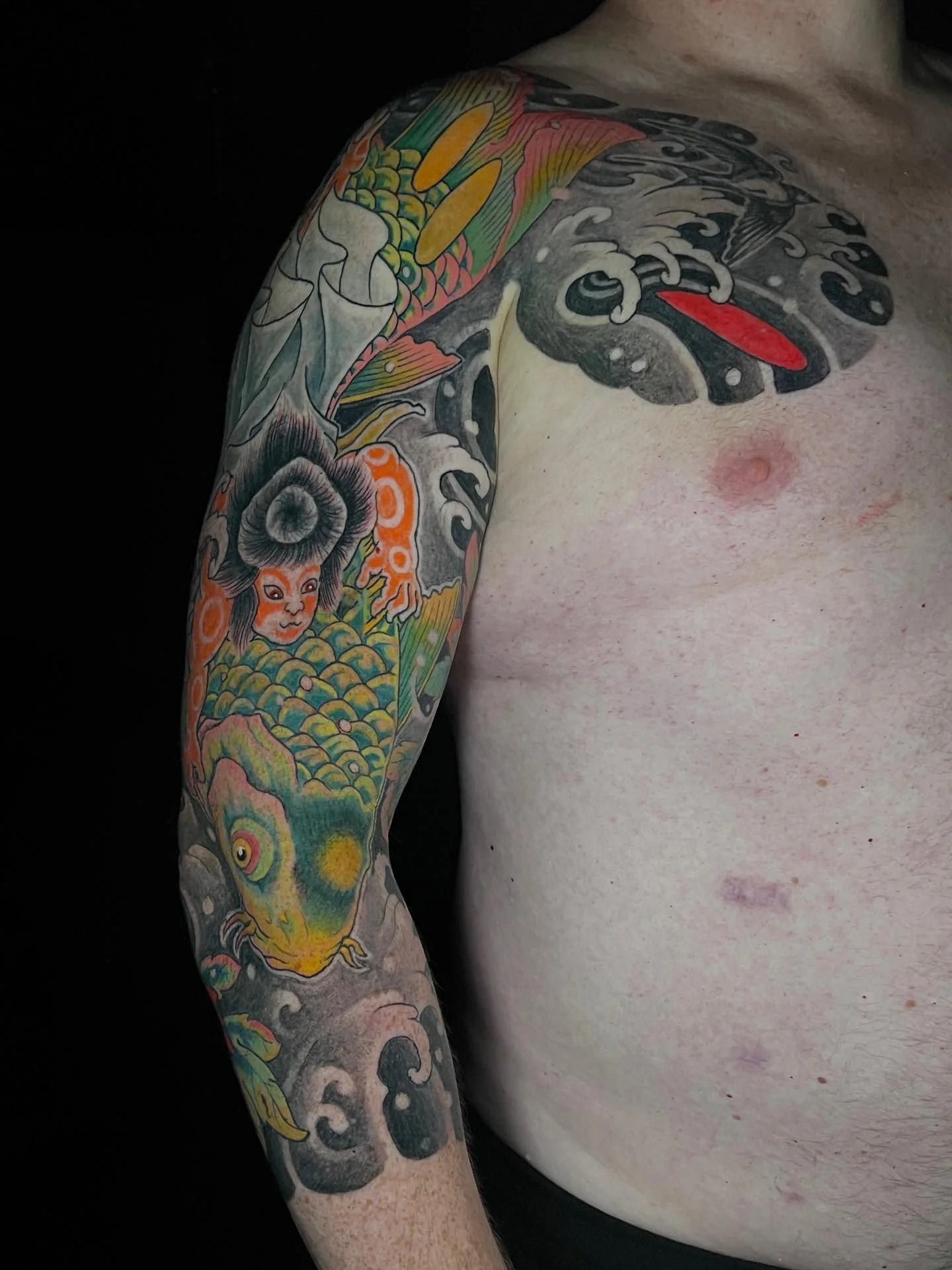
Japanese tattoos, known as irezumi (入れ墨), have a centuries-old tradition deeply rooted in Japanese culture and aesthetics. Historically, irezumi was associated with the criminal underworld and later evolved into a celebrated art form. The Edo period (1603-1868) saw the flourishing of irezumi among the samurai and commoners alike, where tattoos served as marks of bravery, social status, and spiritual protection.
Key Elements of Japanese Tattoos:
• Subjects and Motifs: Traditional Japanese tattoos feature iconic motifs such as dragons, koi fish, cherry blossoms, and mythical creatures like the phoenix and foo dogs.
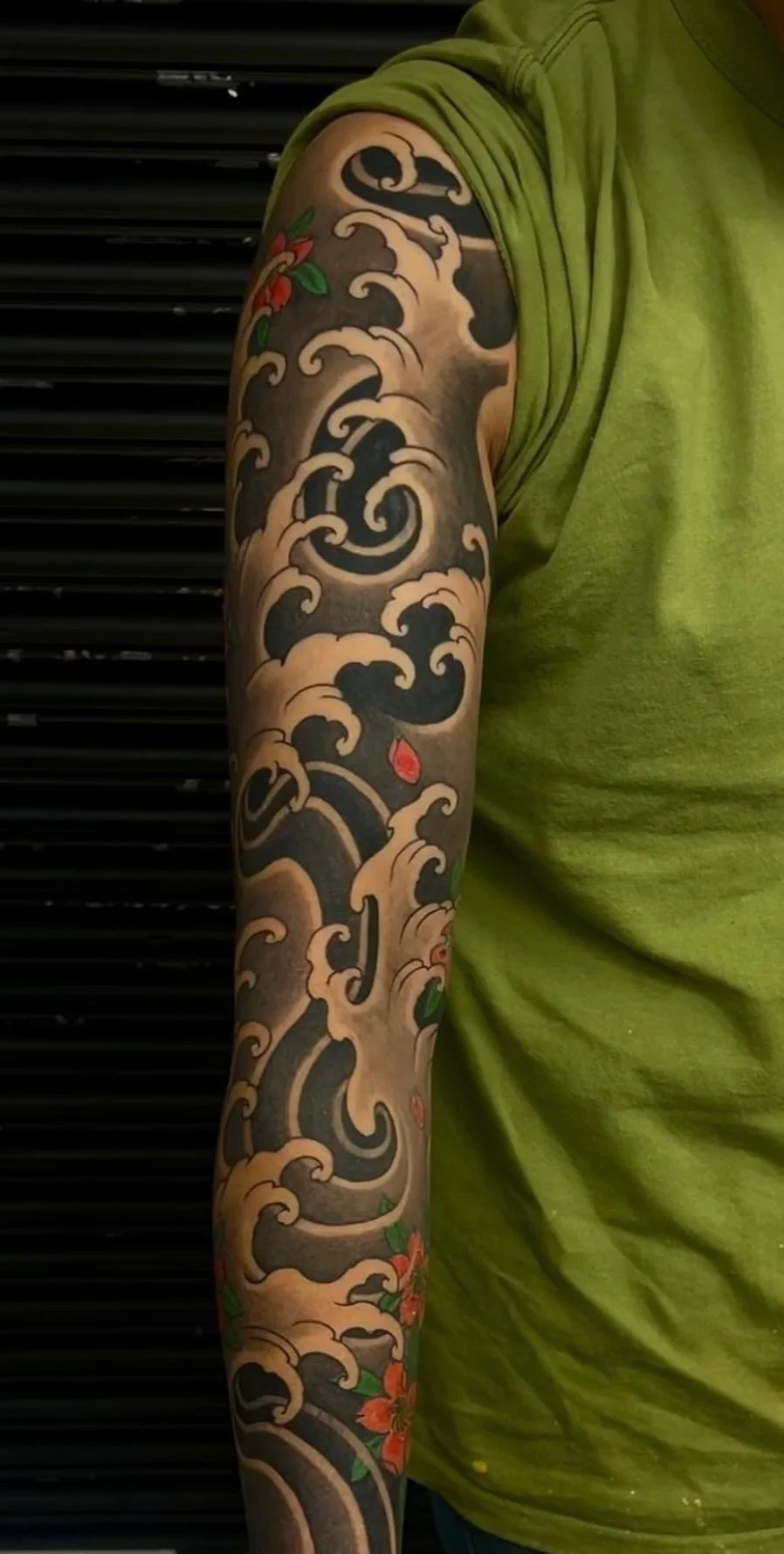
• Design Characteristics: Bold outlines, vibrant colours, and intricate patterns characterise Japanese tattoo designs, often covering large areas of the body in a cohesive composition.
• Symbolism: Each motif in Japanese tattoos carries deep symbolic meanings, reflecting themes of courage, strength, resilience, and spirituality.
Evolution of Chinese Tattoos
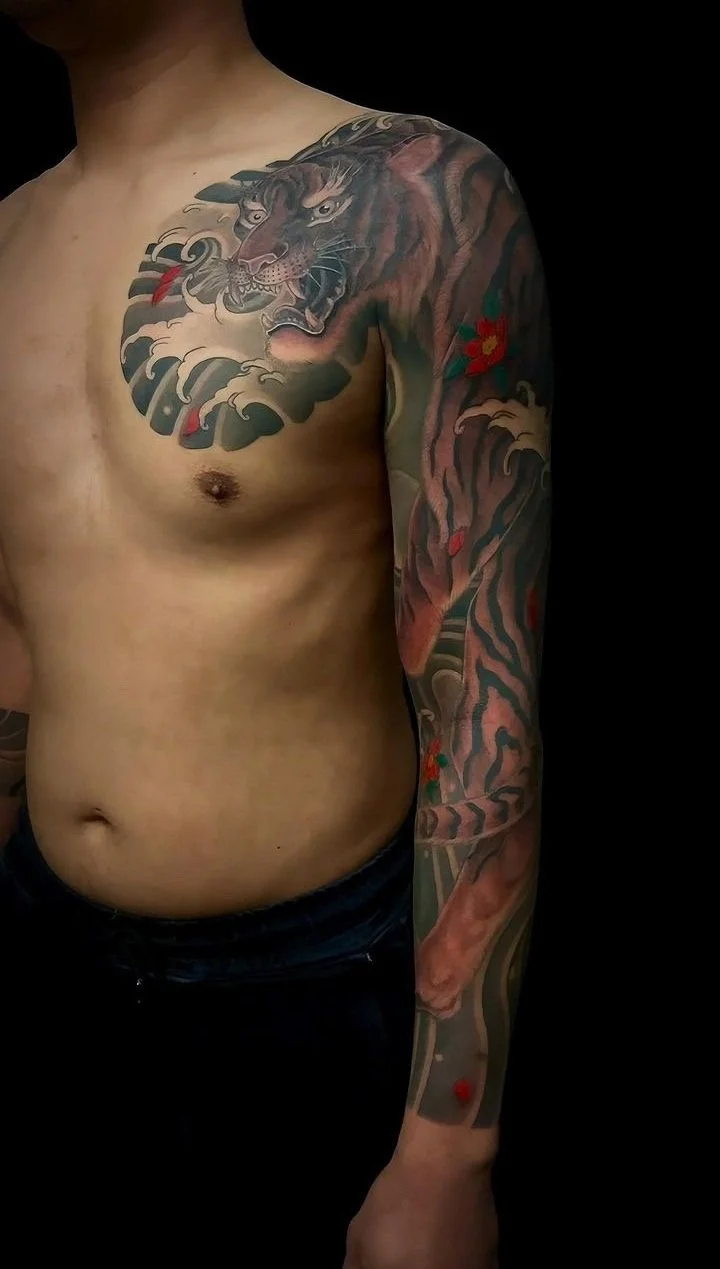
Chinese tattoos have a distinct artistic tradition that draws upon millennia of cultural heritage and symbolism. Unlike Japanese tattoos, which developed their unique style primarily through irezumi, Chinese tattooing has evolved from a combination of historical records, literature, and artistic depictions.
Key Elements of Chinese Tattoos:
• Symbols and Meanings: Chinese tattoos often feature characters from Chinese calligraphy, such as blessings, fortunes, and philosophical concepts like yin and yang, which embody harmony and balance.
•Animal Symbolism: Animals like dragons, tigers, and phoenixes are prevalent in Chinese tattoos, each symbolising virtues like power, protection, and prosperity.
•Influence of Taoism and Buddhism: Taoist and Buddhist elements, including deities, mythical creatures, and spiritual symbols, are also common in Chinese tattoo designs, reflecting beliefs in spirituality and cosmic harmony.
Oriental Tattoos: Fusion of East Asian Cultures
The term “Oriental tattoos” encompasses a broader spectrum of East Asian tattoo styles beyond just Japanese and Chinese influences. This category includes tattoos inspired by Korean, Vietnamese, and other regional artistic traditions, each with their own unique aesthetics and symbolism.
Characteristics of Oriental Tattoos:
Tattoos from different East Asian cultures exhibit a rich tapestry of motifs, styles, and symbolic meanings, reflecting the diversity of cultural influences and historical contexts across the region. Traditional Oriental tattoos are renowned for their fine line work, delicate shading, and intricate details, which emphasise precision and craftsmanship. In modern times, these ancient art forms have evolved, with contemporary interpretations blending traditional motifs with innovative tattoo techniques. This fusion creates a unique synthesis of old and new artistic expressions, bridging historical depth with modern creativity.